Introduction
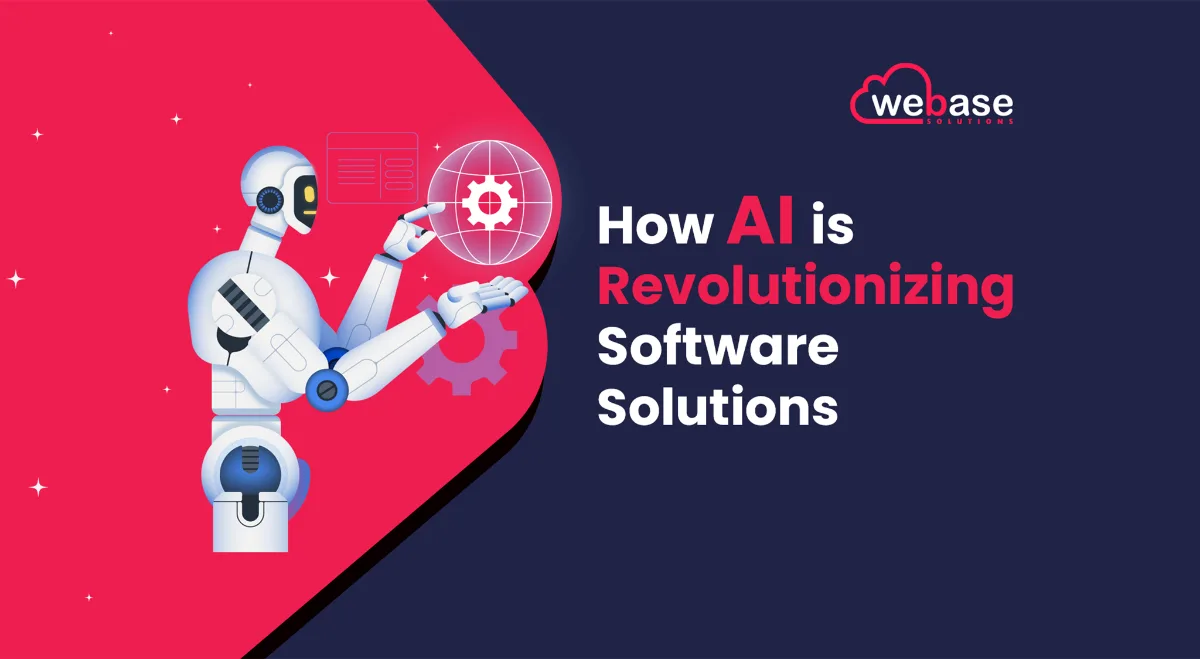
Artificial Intelligence (AI) is no longer a futuristic idea limited to science fiction movies. In 2026, AI has become one of the most powerful technologies transforming the software industry. From automating repetitive tasks to improving customer experiences and enhancing cybersecurity, AI is changing the way modern software solutions are designed, developed, and used
Businesses of all sizes are now investing heavily in AI-powered software to increase efficiency, reduce operational costs, and gain a competitive advantage. Whether it is healthcare, finance, e-commerce, education, or entertainment, AI-driven software solutions are helping organizations work smarter and deliver better services.
In this article, we will explore how Artificial Intelligence is revolutionizing software solutions, the benefits it offers, real-world applications, future trends, and why AI-powered software is becoming essential for modern businesses.
What Is Artificial Intelligence in Software Development?
Artificial Intelligence refers to computer systems that can perform tasks normally requiring human intelligence. These tasks include learning, decision-making, problem-solving, language understanding, and pattern recognition.
In software development, AI technologies are integrated into applications and systems to make them smarter, faster, and more adaptive. AI-powered software can analyze large amounts of data, identify trends, automate workflows, and even predict future outcomes.
Some common AI technologies used in software solutions include:
- Machine Learning (ML)
- Natural Language Processing (NLP)
- Deep Learning
- Computer Vision
- Predictive Analytics
- Robotic Process Automation (RPA)
These technologies are transforming traditional software into intelligent systems capable of continuous improvement.
Key Ways AI Is Revolutionizing Software Solutions
1. Intelligent Automation
One of the biggest impacts of AI in software solutions is automation. AI-powered tools can automate repetitive and time-consuming tasks that previously required human effort.
Examples include:
- Automated customer support
- Data entry automation
- Invoice processing
- Workflow management
- Email filtering
- Report generation
This reduces human errors and allows businesses to focus on strategic activities instead of manual work.
Benefits of Intelligent Automation
- Faster operations
- Lower operational costs
- Improved productivity
- Better accuracy
- Increased efficiency
-
2. Smarter Customer Support with AI Chatbots
AI-powered chatbots and virtual assistants have transformed customer service. Modern chatbots can understand customer queries, provide instant responses, and solve common problems without human intervention.
Businesses now use AI chatbots for:
- 24/7 customer support
- Order tracking
- Product recommendations
- Appointment booking
- Technical assistance
-
AI chatbots improve customer satisfaction while reducing support costs.
-
3. Personalized User Experiences
AI helps software applications deliver highly personalized experiences based on user behavior and preferences.
Popular examples include:
- Personalized movie recommendations
- Smart shopping suggestions
-
AI algorithms analyze user activity to understand interests and provide relevant content in real time.
- Customized news feeds
- AI-driven music playlists
- Adaptive learning platforms
- AI algorithms analyze user activity to understand interests and provide relevant content in real time.
-
Why Personalization Matters
Personalized software experiences increase:
- User engagement
- Customer loyalty
- Conversion rates
- Retention rates
-
4. Faster Software Development
AI tools are now helping developers write, test, and optimize code more efficiently.
AI-assisted development tools can:
- Generate code suggestions
- Detect bugs automatically
- Improve code quality
- Predict software failures
- Automate testing
-
This significantly speeds up the software development lifecycle and reduces development costs.
-
5. Enhanced Cybersecurity
Cybersecurity threats are increasing every year, and AI is becoming a crucial defense mechanism.
AI-powered security software can:
- Detect unusual activity
- Identify malware
-
Unlike traditional security systems, AI continuously learns from new threats and improves its detection capabilities.
- Prevent fraud
- Monitor network traffic
- Respond to cyber threats in real time
-
6. Advanced Data Analytics
Modern businesses generate huge amounts of data daily. AI-powered analytics software helps organizations extract valuable insights from complex datasets.
AI can analyze:
- Customer behavior
- Market trends
- Sales performance
- Financial risks
- Business operations
-
These insights help companies make smarter and faster decisions.
-
7. Predictive Analytics and Forecasting
Predictive analytics is one of the most powerful AI applications in software solutions.
AI systems can predict future outcomes based on historical data. Businesses use predictive analytics for:
- Demand forecasting
- Risk assessment
-
This allows organizations to plan more effectively and reduce uncertainty.
- Inventory management
- Customer behavior prediction
- Financial forecasting
-
Industries Benefiting from AI Software Solutions
Healthcare
AI-powered healthcare software helps doctors diagnose diseases, monitor patients, and improve treatment plans.
Examples include:
- Medical imaging analysis
- AI health assistants
- Drug discovery systems
- Remote patient monitoring
-
Finance
Banks and financial companies use AI software for:
- Fraud detection
- Credit scoring
- Automated trading
- Customer support
- Risk management
-
AI improves security and operational efficiency in the financial sector.
-
E-Commerce
Online stores use AI to enhance customer experiences through:
- Product recommendations
- Personalized marketing
- Smart search systems
- Inventory optimization
- AI-powered chat support
-
Education
AI is revolutionizing online learning platforms by offering:
- Personalized learning paths
- Automated grading
- Virtual tutors
- Smart content recommendations
-
This creates more interactive and effective learning experiences.
-
Manufacturing
Manufacturers use AI software for:
- Predictive maintenance
- Quality control
-
AI reduces downtime and improves production efficiency.
- Supply chain optimization
- Robotics automation
-
Benefits of AI-Powered Software Solutions
Increased Efficiency
AI automates routine tasks, allowing employees to focus on more valuable work.
Cost Reduction
Automation and predictive analytics help reduce operational expenses.
Better Decision-Making
AI analyzes data faster than humans and provides actionable insights.
Improved User Experience
Personalized services create more engaging customer experiences.
Scalability
AI systems can easily handle growing amounts of data and users.
Competitive Advantage
Businesses using AI software often outperform competitors through innovation and efficiency.
-
Challenges of AI in Software Solutions
Despite its advantages, AI adoption also comes with challenges.
High Development Costs
Building AI-powered systems requires advanced technology and skilled professionals.
Data Privacy Concerns
AI systems rely heavily on data, raising concerns about privacy and security.
Ethical Issues
Bias in AI algorithms can lead to unfair or inaccurate decisions.
Integration Complexity
Integrating AI into existing systems may require major infrastructure changes.
-
Future of AI in Software Development
The future of AI-powered software solutions looks extremely promising. Emerging trends include:
- Autonomous AI agents
- AI-powered low-code development
- Hyper-personalized applications
-
As AI technology continues to evolve, software solutions will become more intelligent, adaptive, and efficient.
Businesses that embrace AI early will have a significant advantage in the digital economy.
- AI-driven cybersecurity
- Intelligent cloud computing
- Human-AI collaboration systems
-
Final Thoughts
Artificial Intelligence is transforming the software industry at an unprecedented pace. From automation and cybersecurity to personalization and predictive analytics, AI-powered software solutions are reshaping how businesses operate and interact with customers.
Companies that invest in AI technologies today are positioning themselves for long-term success in an increasingly competitive market. As innovation continues, AI will become an even more essential part of modern software development and digital transformation.
The AI revolution in software solutions is not just beginning it is already here.