In 2025, the digital world is no longer optional—it’s the lifeline of visibility, credibility, and growth. Non-Governmental Organizations (NGOs), whether grassroots projects in rural villages or international nonprofits tackling climate change, now rely on digital presence as much as field operations.
A professional website is more than an online brochure. It is your digital headquarters, your 24/7 communication hub, your global fundraising gateway, and your proof of transparency and accountability.
At Webase Solution, we’ve helped NGOs transition from outdated or fragmented digital presences into professional, impact-driven websites. The result? Increased donor trust, expanded reach, stronger partnerships, and measurable impact. This blog explains why every NGO needs a website in 2025, common pitfalls to avoid, and how we help organizations shine online.
The Digital Reality of NGOs in 2025
NGOs face a unique challenge: they must demonstrate trust, accountability, and impact while competing for limited resources. In today’s world:
-
Donors expect digital transparency. Financial reports, annual impact updates, and storytelling must be publicly available.
-
Fundraising has gone digital. From small donations via mobile wallets to international crowdfunding, online transactions are the norm.
-
Volunteers, beneficiaries, and partners search online first. If you’re not visible, you’re overlooked.
-
Social media alone is not enough. While platforms like Facebook or Instagram help, they are controlled by algorithms, vulnerable to hacks, and don’t allow full transparency.
In short: without a professional website, an NGO risks losing credibility, funding, and visibility in 2025.
Why Every NGO Needs a Professional Website
1. Build Trust with Donors and Supporters
Trust is the currency of nonprofits. Before donating, people search your NGO online to verify credibility.
A modern, user-friendly website:
-
Displays your mission, vision, and impact clearly
-
Shares financial transparency reports, annual audits, and governance details
-
Uses photos, stories, and testimonials to connect emotionally
-
Shows that your NGO is active, professional, and accountable
Research indicates that more than 60% of donors will not give to organizations without a professional online presence.
2. Make Online Donations Easy
Digital giving is exploding. A donation-friendly website ensures you never miss contributions. With proper setup, you can accept:
-
Local mobile banking (bKash, Nagad, Rocket)
-
Credit and debit cards (Visa, MasterCard, Amex)
-
International payments (PayPal, Stripe)
A streamlined donation process increases conversions. Donors are far more likely to give again if the first experience was quick and simple.
3. Share Your Work and Impact Visually
Donors, partners, and the public want to see results. A website allows you to:
-
Publish impact reports, success stories, and event updates
-
Showcase before-and-after photos, videos, and infographics
-
Run blogs or news sections to prove consistent activity
Visual storytelling builds credibility and strengthens long-term supporter relationships.
4. Attract Volunteers and Collaborators
Volunteers are often the backbone of NGOs. A website can:
-
Feature a volunteer sign-up form
-
Promote events and registration pages
-
Provide a partnership inquiry form for CSR and INGOs
The easier you make participation, the more people will get involved.
5. Improve Your Search Engine Ranking (SEO)
Most discovery happens on Google. With an optimized NGO website, you can rank for:
-
“Donate for flood victims in Bangladesh”
-
“Child education NGO in Dhaka”
-
“Free medical services NGO”
Consistent SEO ensures steady organic traffic, reducing reliance on paid advertising.
6. Mobile-Friendly and Secure = More Reach
Most people access websites via smartphones. A professional NGO website must be:
-
Responsive: it should look great on mobile, tablet, and desktop
-
Secure: with SSL certification to protect donor data
-
Fast: optimized for speed and performance
Mobile-first design and strong security combine to create trust and increase conversions.
7. Own Your Platform (Don’t Rely Only on Social Media)
Social media is useful but risky.
-
Accounts can be hacked, banned, or restricted
-
Algorithms can reduce visibility overnight
-
Content is difficult to find through Google search
Your website should be the central hub of your digital presence. Social platforms can support your communication, but your website is where you retain full control of your content and data.
8. Accept Global Donations and Expand Your Reach
A strong website connects you to international donors and grant-makers. You can:
-
Enable multi-currency donations
-
Create campaign-specific landing pages
-
Attract CSR partners, INGOs, and foundations
For example, one Bangladeshi NGO added global payment gateways and saw a threefold increase in international donations within six months.
Common Mistakes NGOs Make
Even well-meaning NGOs often fall into traps:
-
Relying only on social media pages, which lack transparency and SEO
-
Maintaining outdated or broken websites that damage credibility
-
Failing to integrate donation systems, resulting in lost opportunities
-
Using report-heavy content without storytelling, which fails to engage
-
Ignoring regular updates, making the organization appear inactive
A poorly maintained website signals inactivity, which can be more harmful than having no website at all.
How Webase Solution Helps NGOs Shine Online
At Webase Solution, we specialize in building modern, affordable, and impactful websites tailored for NGOs.
Custom NGO Website Design
-
Donation systems (bKash, Nagad, PayPal, Stripe)
-
Volunteer and event management modules
-
Annual reports and publication libraries
-
Multilingual support (Bangla and English)
Affordable Packages
-
Flexible pricing for budget-conscious NGOs
-
Scalable design—start simple, expand later
SEO and International Visibility
-
Search engine optimization for global reach
-
Helps attract CSR partners, INGOs, and grants
Security and Data Protection
-
SSL encryption and GDPR-ready systems
-
Protection of sensitive donor information
Training and Maintenance
-
Training NGO staff to manage content updates
-
Ongoing technical support to keep websites secure and accessible
Real-World Examples
-
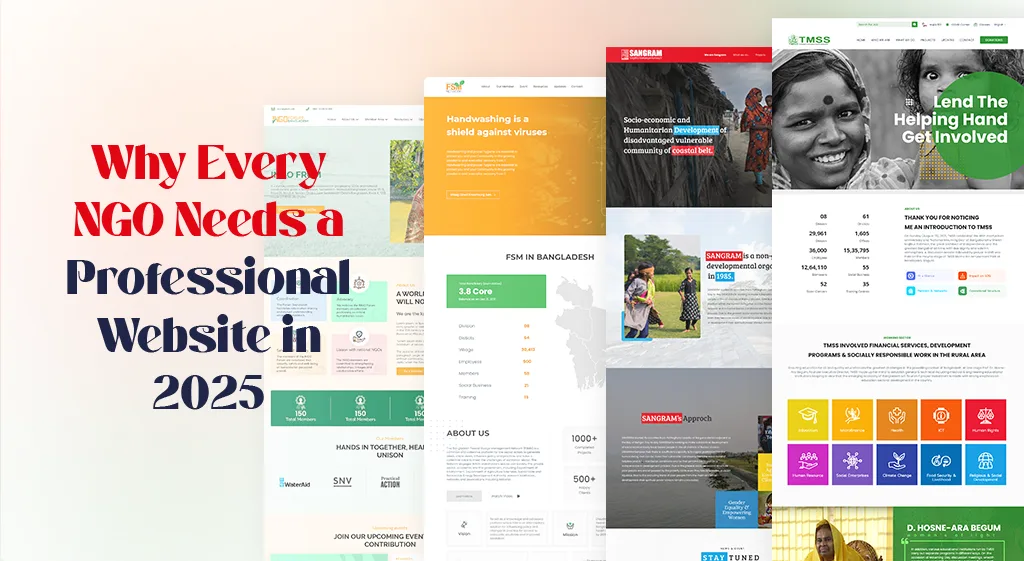
TMSS, the world’s largest NGO, uses its website to share reports and build partnerships
-
Sangram mobilizes community support through online storytelling
-
FSM manages volunteer networks and fundraising campaigns digitally
If global NGOs rely on professional websites, smaller NGOs cannot afford to ignore this in 2025.
Conclusion
In 2025, an NGO website is not a luxury—it is a strategic necessity. It builds trust, secures funding, recruits volunteers, and amplifies impact. Without one, NGOs risk being invisible in a digital-first world.
At Webase Solution, we believe every NGO deserves to be visible, trusted, and supported. That’s why we design professional, affordable, and scalable websites that amplify your mission and prepare you for the future.